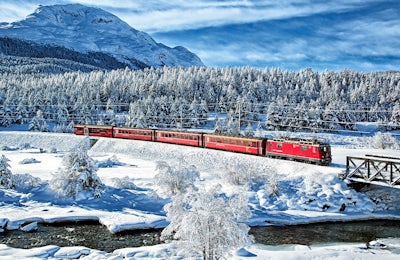
What Makes the Bernina Express Special?
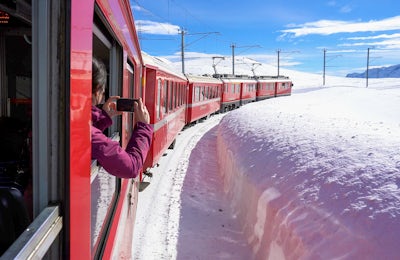
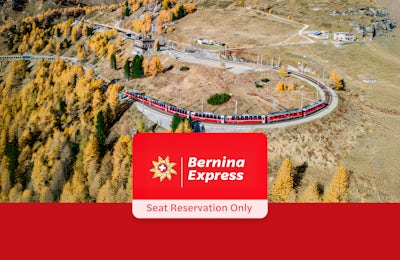
The Bernina Express isn't just a train ride—it's a four-hour journey through some of the most dramatic Alpine scenery on Earth. I've traveled this route multiple times in different seasons, and each trip reveals something new: the summer wildflowers in the Engadin Valley, the autumn larches turning gold, or the pristine winter snowscapes that make you forget the outside world exists.
What sets this train apart from other scenic railways? Three things:
- UNESCO World Heritage status – The Albula and Bernina lines earned this designation in 2008, recognizing over a century of engineering brilliance
- Panoramic cars with floor-to-ceiling windows – Every seat offers unobstructed views without craning your neck
- The steepest adhesion railway in the Alps – No cog wheels needed, yet the train climbs to 2,253 meters at the Bernina Pass
💡 Insider Tip
The Bernina Express follows the same tracks as regular regional trains, but only the Express has panoramic cars. If budget is tight, you can ride the scenic route on standard trains for significantly less—just without the big windows.
How to Book Bernina Express Tickets
Booking the Bernina Express requires understanding a two-part system that trips up many first-time visitors:
- Train ticket – Covers your actual transportation
- Seat reservation – Required and charged separately (typically €14-22 per person)
You cannot board the Bernina Express panoramic train without a seat reservation. This isn't optional—it's mandatory. The train has limited capacity, and during peak summer months (July-August), popular departures sell out weeks in advance.
Best Booking Options
Several platforms sell Bernina Express tickets. Here's my assessment after testing them all:
| Platform | Best For | Considerations |
|---|---|---|
| Tour operators (GetYourGuide, etc.) | Convenience, English support | Slightly higher prices, but includes transfers |
| Rhaetian Railway (RhB) official | Direct booking, Swiss precision | Interface can be complex for visitors |
| Swiss Travel Pass holders | Budget travelers doing Switzerland trip | Still need to pay reservation supplement |
Bernina Express Ticket Prices (2026)
Prices depend on your departure point, destination, and whether you're doing a one-way or return journey. According to official railway sources, here's the current price structure:
From Tirano (Italy)
- Tirano → St. Moritz (one-way): €40
- Tirano → St. Moritz → Tirano (round trip): €80
- Tirano → Chur (one-way): €80
- Tirano → Chur → Tirano (round trip): €160
From St. Moritz (Switzerland)
- St. Moritz → Tirano (one-way): €40
- St. Moritz → Tirano → St. Moritz (round trip): €80
- St. Moritz → Chur (one-way): €54
From Chur (Switzerland)
- Chur → Tirano (one-way): €80
- Chur → Tirano → Chur (round trip): €160
- Chur → St. Moritz (one-way): €54
📋 Note on Prices
These prices are from official Rhaetian Railway sources. Tour packages through booking platforms may include additional services (transfers, guides) and cost more. Always check current prices before booking.
The Best Time to Ride the Bernina Express
Each season offers a different experience. Having ridden this route in summer, autumn, and winter, here's my honest take:
Summer (May – October)
The most popular season for good reason. The summer timetable offers more departures, the weather is predictable, and you'll see the full spectrum of landscapes from glaciers to palm trees in Tirano. Downside? Crowds. The train runs at capacity, and you'll share viewpoints with many other travelers.
Golden Hour: September
My personal favorite. The larches in the Engadin Valley turn golden, summer crowds thin out, and the light hits the mountains at perfect angles. Photographers, take note—this is your month.
Winter (December – April)
A completely different experience. The snow-covered landscape is magical, and you'll have more space to yourself. However, daylight hours are shorter, some sections may have reduced visibility due to weather, and the summer Bernina Express Bus connection to Lugano doesn't operate.
⏰ Best Time of Day
For photography, the morning departures from St. Moritz heading to Tirano offer the best light on the iconic viaducts. The sun angles create dramatic shadows on the Brusio Circular Viaduct around midday.
Which Side Should You Sit On?
This is the question everyone asks, and there's no perfect answer. The Bernina line twists through mountains, so both sides offer stunning views at different points. That said:
- Traveling south (Chur/St. Moritz → Tirano): Right side offers better views of the Morteratsch Glacier and Palü Glacier
- Traveling north (Tirano → St. Moritz/Chur): Left side gives you the glacier views
- The Landwasser Viaduct: Visible from both sides as the train crosses it—look out the back window for the iconic photo angle
- Brusio Circular Viaduct: Best viewed from the left side heading south
Pro tip from experience: In First Class with 2+1 seating, book the single seat on the preferred side. In Second Class with 2+2 seating, window seats go fast.
Route Highlights: What You'll See
The Bernina Express route packs an extraordinary amount of scenery into four hours. Here are the moments when you'll want your camera ready:
Landwasser Viaduct
The most photographed railway bridge in Switzerland. The train emerges from a tunnel directly onto this 65-meter-high curved viaduct, plunging into another tunnel on the opposite side. Seen it on postcards? It's even more impressive in person.
Albula Spiral Tunnels
Engineering from 1903 that still impresses today. The train gains 400 meters of altitude through a series of helical tunnels—you'll see the same valley from three different levels.
Morteratsch and Palü Glaciers
The train passes within sight of both glaciers. The Morteratsch Glacier has retreated significantly in recent decades—a visible reminder of climate change that hits harder than any chart.
Lago Bianco (White Lake)
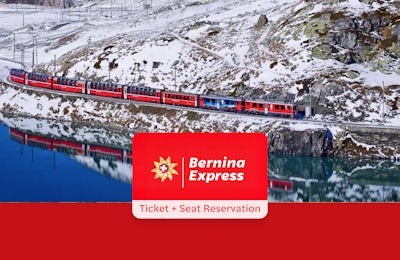
At 2,253 meters, this is the highest point on the journey. The milky turquoise color comes from glacial sediment. In winter, it's frozen solid and covered in snow.
Brusio Circular Viaduct
The train descends through a 360-degree loop on an open stone viaduct—a unique engineering solution to a steep gradient that provides panoramic views of the Valtellina Valley.
First Class vs. Second Class
Both classes have identical panoramic windows—you won't miss any views in Second Class. The differences:
| Feature | First Class | Second Class |
|---|---|---|
| Seating layout | 2+1 (three across) | 2+2 (four across) |
| Seat width | Wider leather seats | Standard fabric seats |
| Legroom | More generous | Adequate |
| Typical crowd level | Quieter | More social |
| Power outlets | ✓ | ✓ |
| Free WiFi | ✓ | ✓ |
Is First Class worth the extra cost? For photographers wanting the solo window seat on the scenic side, absolutely. For most travelers, Second Class delivers the same views with a more communal atmosphere.
Read Full First Class Guide →How to Save Money on Bernina Express
Let's be honest—Swiss trains aren't cheap. Here are legitimate ways to reduce costs:
- Swiss Travel Pass: Covers the train fare (you still pay the mandatory seat reservation). Worth it if you're doing multiple Swiss train journeys
- Eurail/Interrail Pass: Similar deal—pass covers transport, reservation extra
- Children under 6: Travel free without seat reservation
- Children 6-15: Travel free with a Swiss Family Card when accompanied by a parent
- Bernina Express Last-Minute: Occasionally available at reduced rates when seats remain unsold
- Standard regional trains: Same route, regular windows, significantly cheaper—no reservation needed
What to Bring on the Bernina Express
- Camera with fully charged battery: You'll take hundreds of photos
- Snacks and water: Onboard catering exists but is limited and pricey
- Layers: Air conditioning can run cold, and you might want to open windows at stops
- Entertainment for kids: Four hours is long for little ones between scenic highlights
- Downloaded offline content: WiFi exists but can be spotty in tunnels
Frequently Asked Questions
Yes, but space is limited. Each passenger can bring hand luggage and one larger bag. Overhead racks exist, but bulky luggage should be placed in designated areas at car ends. For multi-day trips, consider using Swiss Rail's luggage transfer service to ship bags ahead to your hotel.
The train offers limited accessibility. Some panoramic cars have wheelchair spaces, but not all. Contact Rhaetian Railway directly when booking to arrange assistance and ensure appropriate carriage allocation.
Bicycles can be transported on the Bernina Express for an additional fee, but space must be reserved in advance. Folding bikes that fit in luggage bags are easier to accommodate.
Yes, dogs can travel on the Bernina Express. Small dogs in carriers travel free; larger dogs require a half-price ticket. The train can get crowded, so consider your pet's comfort during the four-hour journey.
Severe weather rarely stops the Bernina Express—it operates year-round through Swiss winters. However, if cancellation occurs, you're entitled to rebooking or refund. Check the Rhaetian Railway website for real-time service updates.
The Bernina Express ticket typically allows one journey without intermediate stops. If you want to explore Pontresina or Alp Grüm mid-route, consider buying separate regional train tickets for each segment—it offers more flexibility.